
Fiberglass Pool Installation in St. Lucie County, FL
A fiberglass pool arrives as one finished shell, built in a factory and trucked to your home. A crane sets it in the ground in a single day. Sensassion Pools and Spa handles fiberglass pool installation across St. Lucie County, from the first site survey to the first swim.
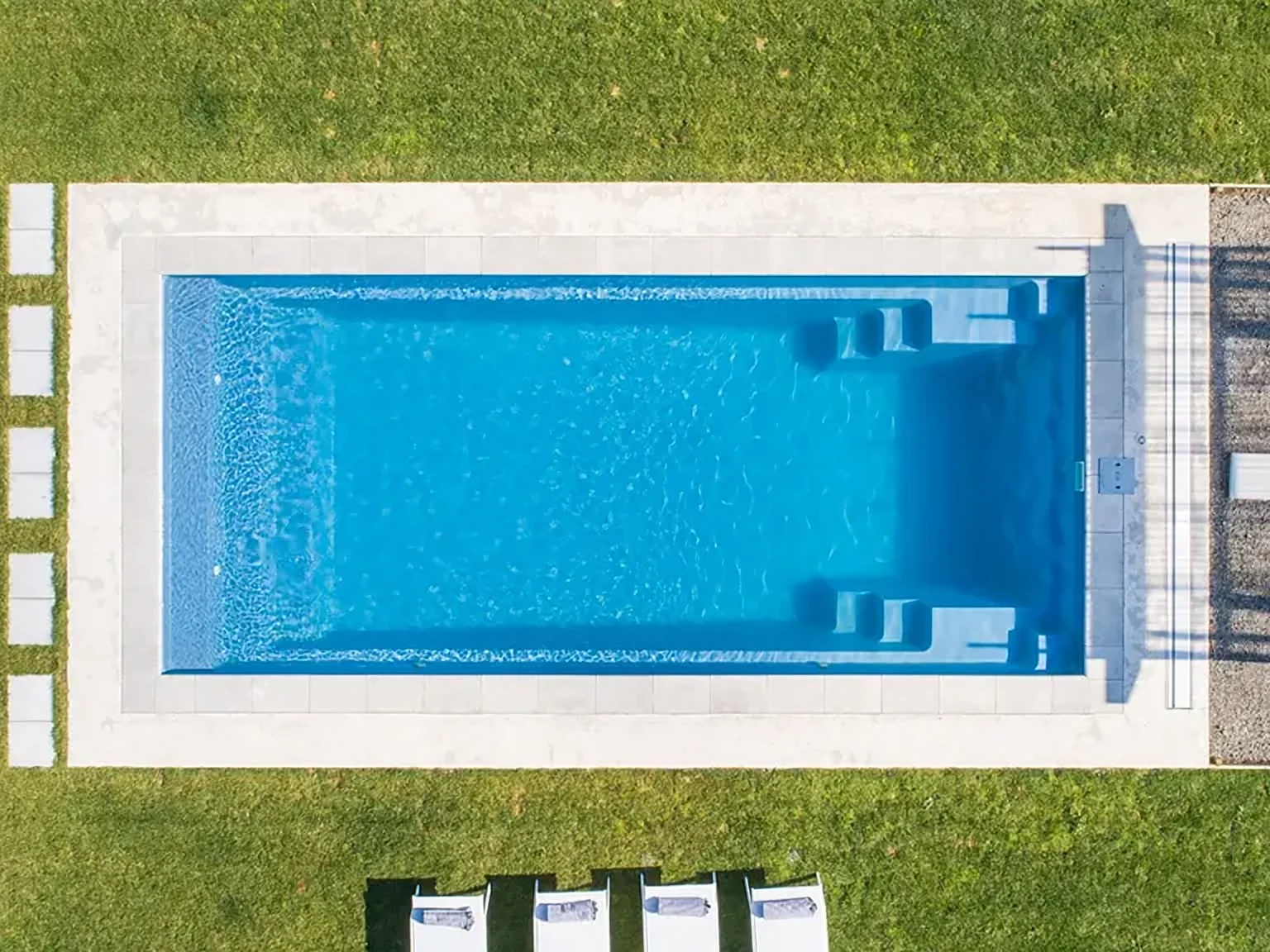
Putting In a Fiberglass Pool on a Treasure Coast Lot
Fiberglass suits Florida for three plain reasons. The gelcoat surface is smooth and nonporous, so algae has a hard time holding on. It works well with salt chlorine generators. And it never needs replastering, which concrete pools do every 10 to 15 years.
| Feature | Fiberglass | Concrete | Vinyl liner |
|---|---|---|---|
| Build time after permits | About 3 to 6 weeks | Several months | About 6 to 8 weeks |
| Surface | Smooth gelcoat | Plaster or pebble | Vinyl sheet |
| Major upkeep | Rare | Replaster every 10 to 15 years | New liner every 5 to 15 years |
| Shape choices | Set factory models | Any shape | Many shapes |
| Max width | About 16 feet | No limit | No real limit |
What Does a Fiberglass Pool Cost in St. Lucie County?
National guides from HomeAdvisor put installed fiberglass in ground pools at $40,000 to $100,000. Most Florida projects land in the middle of that range. The shell alone runs about $4,500 to $30,000, based on size and features.
| Pool size | Typical installed range | Good for |
|---|---|---|
| Plunge pool, about 10 by 20 | $40,000 to $60,000 | Small yards, cooling off, lounging |
| Family pool, about 14 by 28 | $55,000 to $85,000 | Most Port St. Lucie backyards |
| Large pool, about 16 by 40 | $80,000 and up | Big lots, laps and parties |
Installing a Fiberglass Pool: From Survey to First Swim
Every fiberglass inground pool installation we do follows the same ten stages.
- Pick the shell. We match model, size and depth to your yard and how you swim.
- Survey and permits. We plot the pool against setbacks, easements and the septic system, then file for permits.
- Call Sunshine 811. Florida law requires a utility locate request two full business days before digging.
- Dig and dewater. The crew excavates to the exact shell size and pumps groundwater out of the hole.
- Build the base. A level, compacted bed of clean stone gives the shell even support.
- Set the shell. A crane lifts the pool over the house and lowers it onto the base.
- Plumb and bond. The crew runs pipes to the equipment pad and bonds metal parts per the electrical code.
- Backfill while filling. Water and backfill rise together, so pressure stays equal on both sides of the walls.
- Coping, deck and enclosure. Pavers or concrete go down, then the screen frame goes up.
- Start up. We balance the first fill and show you the equipment.
How Our High Water Table Changes the Dig
In much of St. Lucie County, groundwater sits only a few feet below the surface. During rainy season it rises even closer. A fiberglass pool hole often hits water before it reaches full depth.We plan for this before the excavator arrives. Well points or a sump pump pull groundwater down while the crew works. A hydrostatic relief valve in the floor lets groundwater push into the pool instead of pushing the shell up. These steps add a little cost and save a lot of risk.
Can a Fiberglass Pool Float Out of the Ground?
Yes, if someone drains it at the wrong time. An empty shell is light, and wet soil can lift it like a boat. Never drain a fiberglass pool fully without a pro checking the groundwater first. Partial drains for water balance are usually safe.
Small Pools and Plunge Pools for Tight Yards
Not every lot has room for a 40 foot pool. Many older Port St. Lucie homes sit on lots near a quarter acre, with the septic tank and drain field in the backyard. A plunge pool fits where a full pool will not. Most run 10 to 14 feet wide and 20 to 24 feet long.Plunge pools cost less to heat, use less water and leave room for a deck and grill. Many include a tanning ledge, a shallow shelf for lounging chairs, and bench seating. Add a small heat pump, and it works year round.

Can a Fiberglass Pool Go Partly Above Ground or on a Slope?
Yes, with the right support. A semi in ground pool sits partly above grade. Retaining walls or a raised deck wrap the exposed side. This works well on sloped lots or where the water table makes a deep dig hard. An engineer designs the support walls, and the permit covers them.
How Deep Can a Fiberglass Pool Be?
Most residential shells run from about 3.5 feet at the shallow end to 6 feet at the deep end. Some models reach about 8 feet. Few fiberglass pools are deep enough for a diving board, so check the model before you plan one. Many Florida buyers pick a sport pool for volleyball and play. It keeps an even depth of 4 to 5 feet.
Florida Safety Rules for a New Home Pool
The Florida Residential Swimming Pool Safety Act, Chapter 515 of the Florida Statutes, applies to every new home pool. You must choose at least one approved safety feature before the final inspection:
- A barrier at least 4 feet high, with a self closing and self latching gate
- An approved safety pool cover
- Alarms on every door and window that leads to the pool
- Self closing, self latching devices on doors to the pool
Should I Install a Fiberglass Pool Myself?
We advise against it. Florida’s owner builder exemption lets a homeowner pull some permits. The owner then carries the legal and safety risk. A shell set out of level, or backfilled the wrong way, can bulge or crack. Many manufacturers also tie their shell warranty to a trained installer. The crane, dewatering and bonding work leave little room for learning on the job.
Can You Replace an Old Pool With Fiberglass?
Yes. Owners of aging vinyl liner pools, or concrete pools that need costly replaster, often switch. The crew removes the old pool, reshapes the hole and sets a new shell. In some cases, a fiberglass insert can go inside an existing concrete pool. The site visit tells us which path fits your yard.
Questions to Ask Fiberglass Pool Installers Near You
A good install matters as much as a good shell. Fiberglass swimming pool installation is a specialty skill, and not every pool builder does it often. Before you sign with anyone, ask:
- How many fiberglass shells have you set in St. Lucie County?
- Are you certified by the shell manufacturer?
- What backfill do you use, and do you fill and backfill together?
- How do you handle groundwater during the dig?
- Who registers the shell warranty, and what does it cover?
- What is your workmanship warranty, in writing?
How Your Neighborhood Shapes the Build
| Area | Common lot type | What we plan for |
|---|---|---|
| Tradition and Southern Grove | Newer HOA lots, often on lakes | Lake setbacks, utility easements, enclosure style rules |
| St. Lucie West and PGA Village | Golf course and gated lots | Stray golf balls, view rules, crane access through gates |
| Older lots near Gatlin Blvd and Becker Rd | Quarter acre lots with septic | Drain field, tight side yards, plunge pools |
| Canal homes on the North Fork of the St. Lucie River | Waterfront lots with seawalls | Seawall setbacks, soft soil, extra dewatering |
| Fort Pierce, Lakewood Park and River Park | Larger lots, wells and septic | Well and septic setbacks, longer equipment runs |
| Hutchinson Island | Coastal lots near A1A | State coastal construction line review, salt resistant parts |