The short version
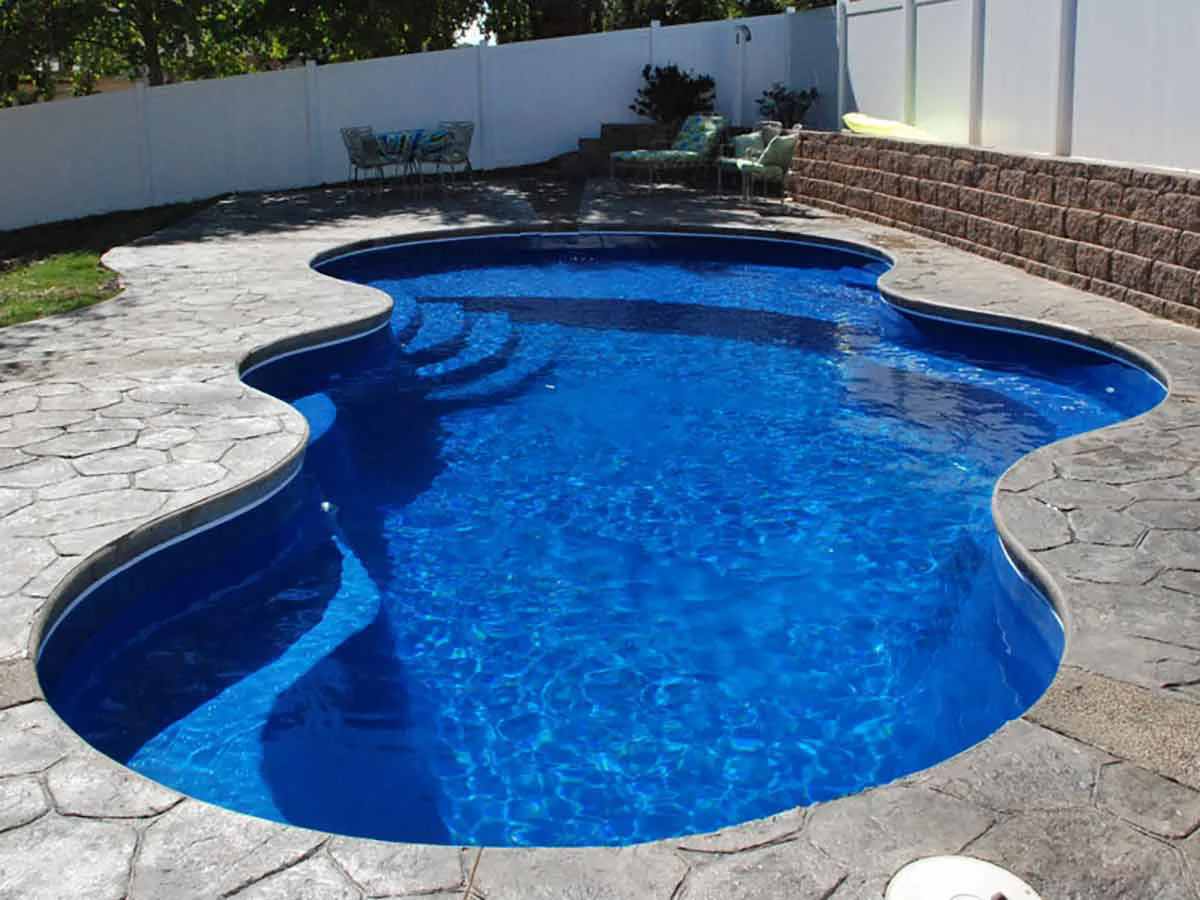
There is no single best pool, but there is a best pool for you. The pattern across every honest comparison, including ours: concrete wins on unlimited custom design, vinyl wins on the lowest sticker price, and fiberglass wins on speed, surface feel, lifetime cost and low maintenance.
Full disclosure: we install fiberglass pools only (Latham and X-Pools). We chose the material on purpose, and this guide explains why, but we’ll tell you plainly where concrete or vinyl is the better fit.
Side by side
| Fiberglass | Concrete (gunite) | Vinyl liner | |
|---|---|---|---|
| Installed cost | From $37,990 (our real prices) | $60,000–$100,000+ industry est. | $35,000–$65,000 industry est. |
| Time on site | Weeks — shell sets in 1–3 days | Typically 3–6 months | 4–8 weeks |
| Surface | Smooth gelcoat, gentle on feet | Plaster or aggregate, can be rough | Smooth but puncturable |
| Recurring big cost | None built in | Resurfacing every 7–15 yrs | New liner every 8–10 yrs |
| Weekly upkeep | Lowest; algae-resistant surface | Highest; brushing + more chemicals | Moderate |
| Design freedom | 68 factory designs, to ~16 ft wide | Unlimited shape, size, depth | Flexible shapes, limited features |
| Salt water | Excellent (included with ours) | Harder on finishes over time | Fine with right hardware |
| Warranty | Latham: lifetime structural | Varies by builder | Shell yes; liners much shorter |
Industry figures are typical published ranges for Florida; our fiberglass numbers are the actual starting prices from our cost guide.
Where fiberglass wins
- Lifetime cost. No resurfacing, no liners. The gelcoat surface also resists algae, which cuts chemical use.
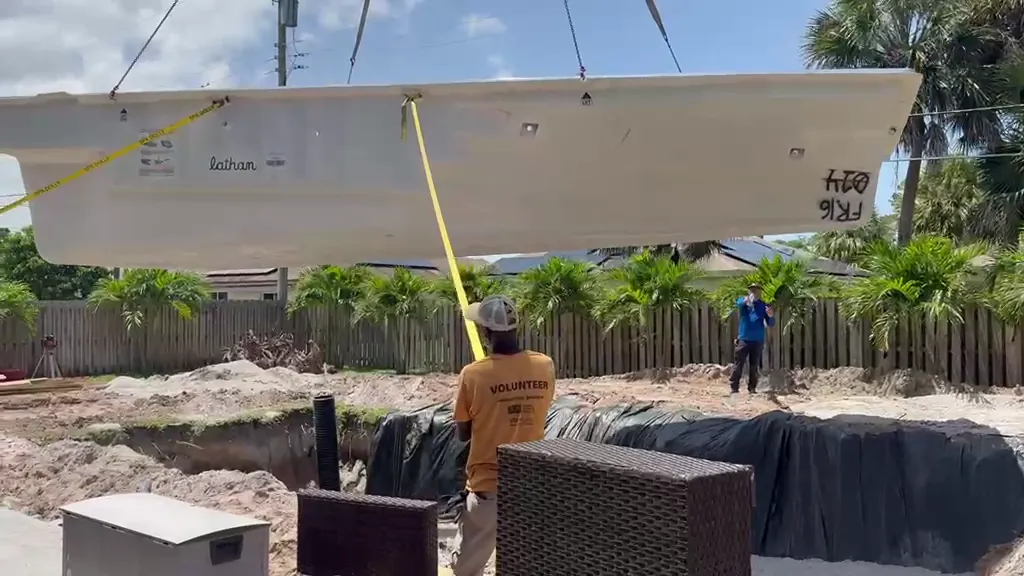
- Speed. The shell arrives finished. Once permits are in hand, you are weeks from swimming, not months. See the timeline guide.
- Comfort. The surface is smooth on feet and swimsuits, and built-in seats and steps come molded in.
- Warranty. Our premium line, Latham, backs the structure for life.

Where concrete wins
If your vision is a 20-by-45 custom lagoon with a swim-up bar, a tanning shelf shaped to your patio and a vanishing edge, concrete is the only material that does it. You pay for that freedom twice: upfront (industry guides put Florida gunite at $60,000 to $100,000+) and over time (acid washes, brushing and resurfacing every 7 to 15 years). For a one-of-a-kind architectural pool with the budget to match, it is the right choice, and it is not what we sell.
Where vinyl wins
Vinyl-liner pools have the lowest upfront price of the in-ground options and a smooth surface. The catch is the liner itself: plan on replacing it roughly every 8 to 10 years, and sooner with dogs, branches or rough use. Over 20 years, two or three liners usually erase the upfront savings, which is why we see vinyl chosen mainly on initial budget.
The South Florida factor
Two local realities push our recommendation toward fiberglass. First, the high water table: the shorter the excavation stays open, the fewer dewatering surprises, and a fiberglass shell is set within days. Second, salt water: most of our clients want it, it is included in our package, and fiberglass is the material that likes it most.
Common questions
Which pool type is cheapest to own long-term?
Fiberglass, in most comparisons. Concrete needs resurfacing every 7 to 15 years and more chemicals; vinyl needs a liner replacement roughly every 8 to 10 years. A fiberglass gelcoat shell avoids both, which is why industry guides consistently rank it lowest on lifetime cost.
Is fiberglass strong enough for Florida?
Yes. The shells are engineered one-piece structures, and our Latham pools carry a lifetime structural warranty. Fiberglass also handles South Florida’s high water table well because the install window is short and the shell is set and plumbed quickly.
Can a fiberglass pool be any shape?
No, and that is the honest trade-off. Fiberglass shells come in factory designs, generally up to about 16 feet wide, because they travel by truck. We carry 68 designs and sizes between Latham and X-Pools, so most families find their shape, but if you want a 20-foot-wide custom lagoon, concrete is the right tool.
Do salt water systems work with all three?
Salt systems pair beautifully with fiberglass, which is why one is included in our standard package. On concrete, salt can be harder on the interior finish over time; on vinyl it is generally fine with the right hardware.
Why do you only install fiberglass?
Because for the way most South Florida families use a pool, it wins on speed, upkeep and lifetime cost, and we can stand behind a published installed price. We would rather be excellent at one construction type than average at three.