The realistic overview
A fiberglass pool project has two clocks. The paperwork clock (design, HOA approval, engineering and permits) typically runs a few weeks and varies by city and community. The construction clock is the part we control, and it is short: most of our installs are two to four weeks on site, with the shell itself set within days.
The one-line answer: plan for roughly two to three months from contract to first swim, and know that most of that is approvals, not digging.
Phase by phase
| Phase | What happens | Typical duration |
|---|---|---|
| 1. Design & contract | Pick the model and placement, confirm access and the installed price | A few days to 2 weeks |
| 2. Approvals | HOA review (if any), engineer plan, permit application — we coordinate all of it | 2–6 weeks, varies by municipality |
| 3. Excavation & shell set | Dig, grade, crane or carry the shell in, level and begin filling | 1–3 days |
| 4. Plumbing, electric & backfill | Equipment pad, subpanel wiring, pressure tests, inspections, backfill | 1–2 weeks |
| 5. Decking & finish | Pavers at $18/sq ft, final inspection, salt startup and handover | 1–2 weeks |
What install week looks like
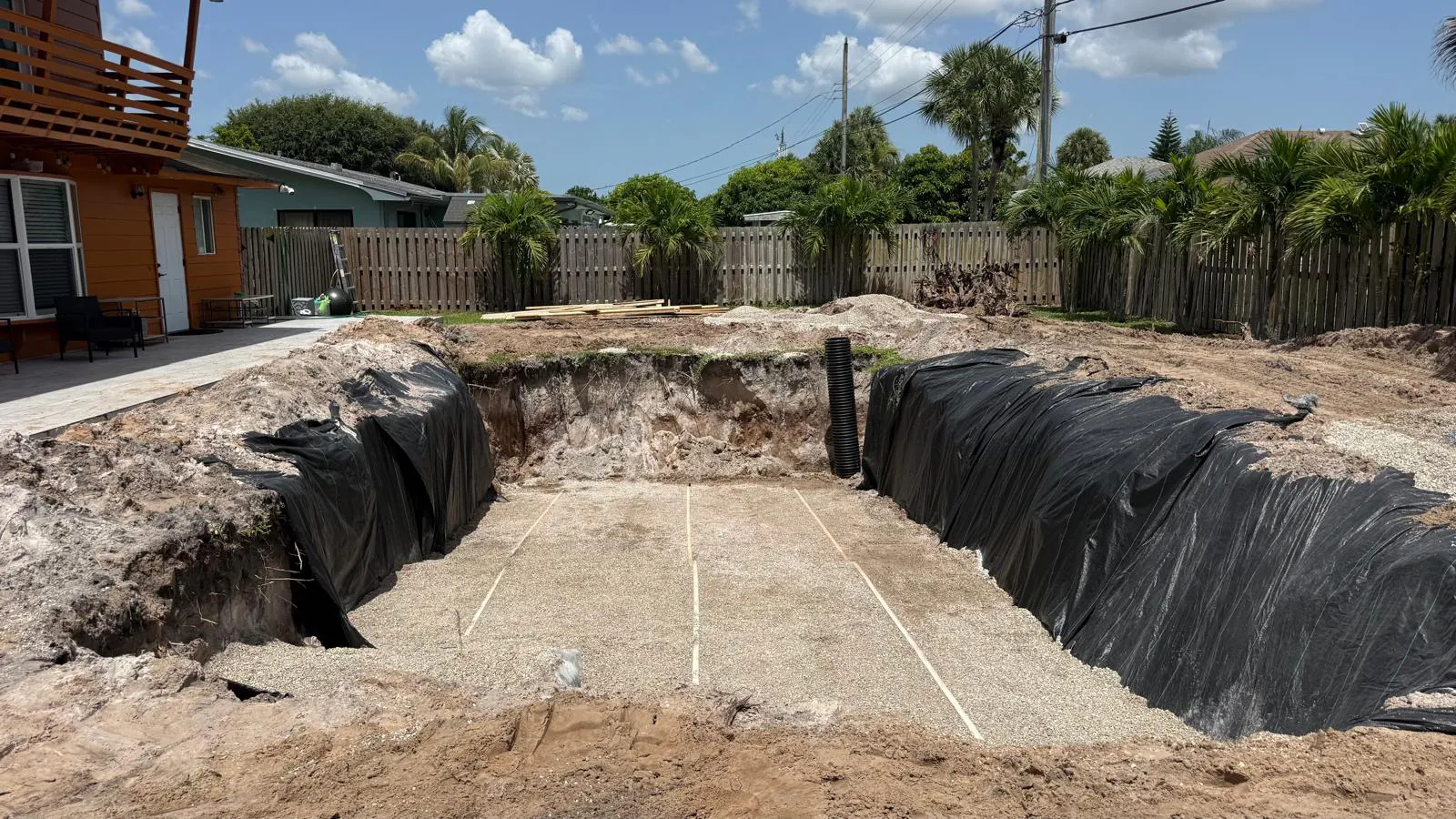
- Day 1: utilities marked, access protected, excavation begins. In most yards the hole is done the same day.
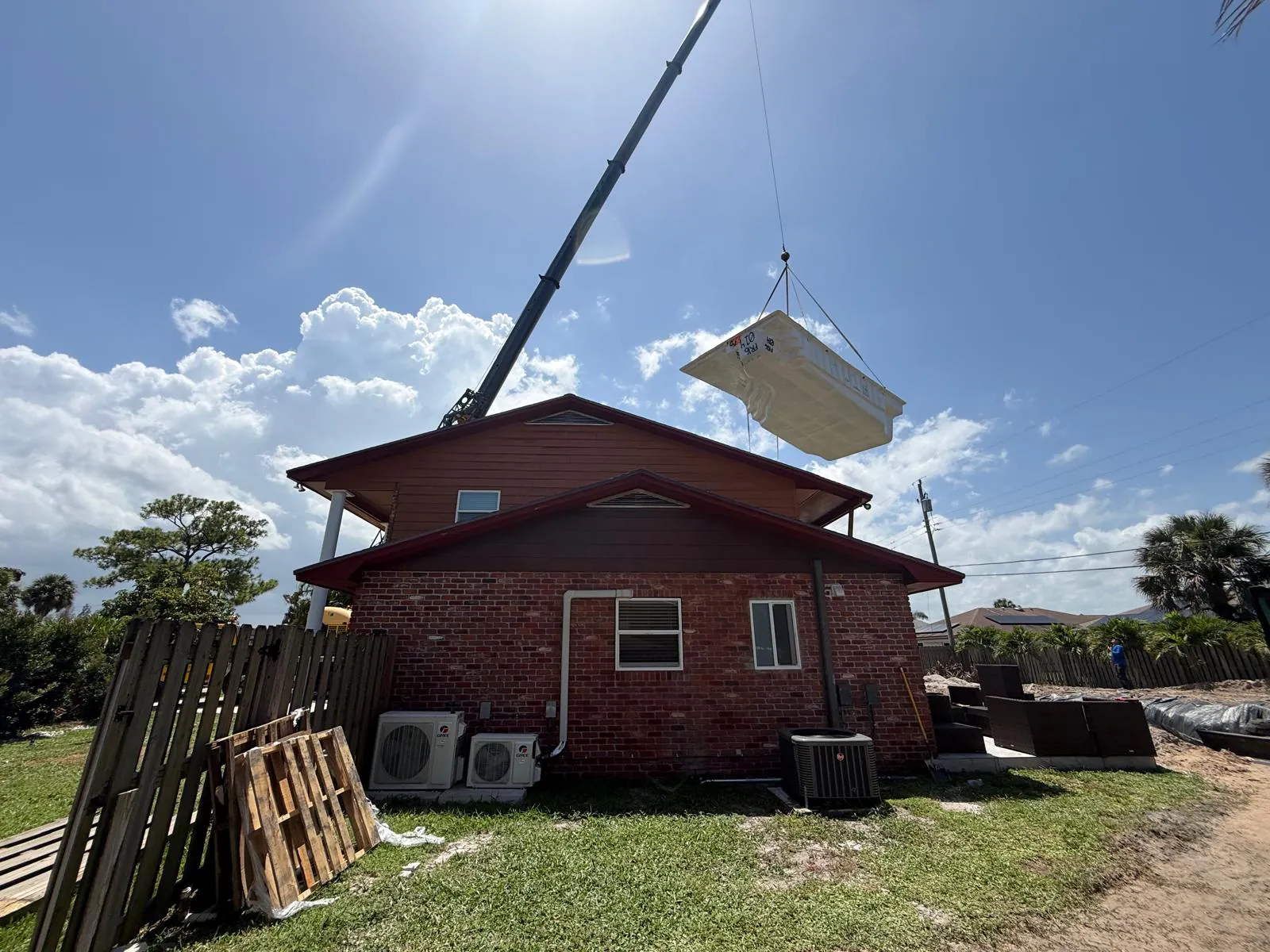
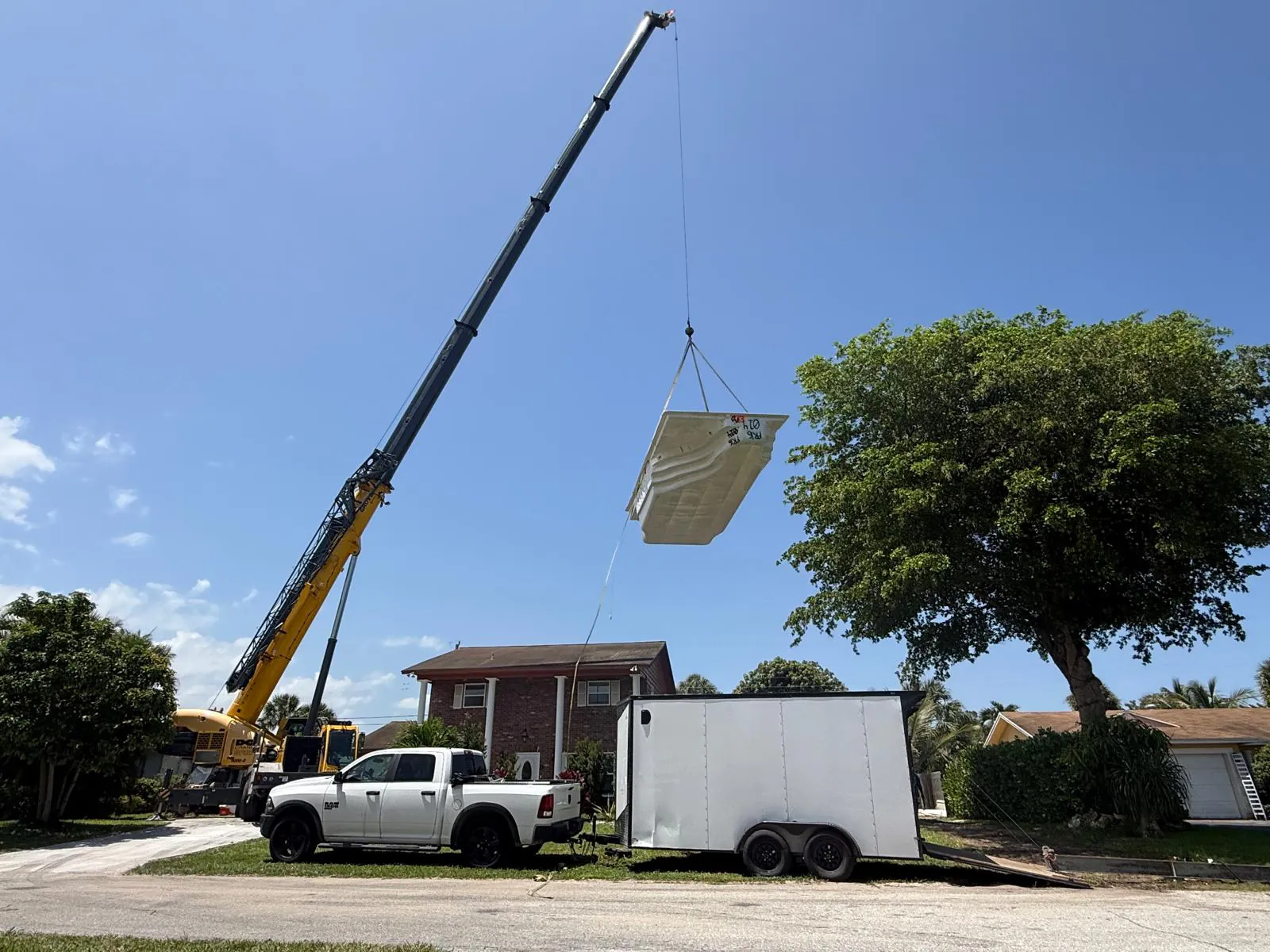
- Day 2: base material graded and leveled; the shell arrives and is set, often by crane over the house. The most photogenic hour of the project.
- Day 3: the shell is leveled to spec and water and backfill rise together so the shell stays true.
- Rest of the window: trenching, plumbing and electrical, inspections, then decking. You are swimming while a concrete pool would still be bare shotcrete.
Permits and HOA, the honest part
Every pool in Florida needs a building permit, an engineer plan and final inspections, and many communities add an HOA architectural review on top. This is the least predictable part of any timeline, which is why permit coordination and the engineer plan are included in our standard installation. If you live in an HOA community, start with our HOA approval guide; getting that application right the first time is the single best thing you can do for your schedule.
What actually causes delays
- Permit queues. Municipal review times vary widely; some offices add extra inspections that stretch things by weeks.
- HOA cycles. Many committees meet monthly. Missing one meeting can cost four weeks, so submissions need to be complete.
- Summer rain. An open excavation and a June downpour do not mix; we sequence around the forecast.
- Change orders. Deciding decking or heating mid-project pauses work. Decide the options up front; the cost guide lists them all.
Timeline questions
How long does the whole project take, start to finish?
Plan on roughly two to three months from signed contract to first swim for a typical project: a few weeks of design, HOA and permitting, then two to four weeks of on-site work. The paperwork phase varies the most by municipality and community.
How long is my yard actually a construction site?
Usually two to four weeks. The dramatic part is short: excavation and setting the shell typically take one to three days. The rest is plumbing, electrical, inspections, backfill and decking.
What slows a pool project down in South Florida?
Four things, in order: permit office queues, HOA review cycles, summer rain, and inspection scheduling. We handle the paperwork and sequence the trades, but none of us can rush a county inspector or a thunderstorm.
Is there a best season to order?
Ordering in fall or winter usually means an easier permit queue and a pool that is ready well before summer. Spring orders join the rush. The install itself happens year-round here.
How is this different from a concrete pool timeline?
Concrete is typically a three-to-six-month build because the pool is constructed in place: shotcrete, curing, tile, coping and plaster each take their own weeks. A fiberglass shell arrives finished, which is where the months go away.